Skip to content
  • Support
    • Connection Support Groups
    • Family Support Group
    • Social Groups
    • Support & Social Group Feedback
    • Youth Programs
  • Education
    • Basics
    • Family and Friends
    • Family to Family
    • Asking For Change Workshop
    • STRive Course
    • Trusted Adult
  • Advocacy
    • CALM
    • Ending the Silence
    • FaithNet
    • In Our Own Voice
    • Advocate on Lobby Day
    • NAMI On Campus
    • See Me
    • Stigma Free Company
  • Resources
    • Blog
    • About Mental Illness
      • About Mental Illness
      • Adverse Childhood Experiences
      • Co-occurring Disorders
      • Facts and Numbers
      • Knowing the Warning Signs
      • Mental Health Glossary
    • Community Resources
      • Adult Family Homes
      • Council for the Homeless
      • Crisis Lines
      • Free Clinic Of SW WA
      • General Resource List
      • Inpatient & Residential Facilities List
      • Legal
        • Legal Resources
        • Alternatives to Guardianship
        • Guardianship
        • Joel’s Law
        • Medication While Incarcerated
        • WA State Commitment Laws
        • When to Call 911
      • BIPOC Mental Health
      • NAMI Flyers
      • Shonna Roberts and DAELA Cosmetic Tattoo
      • SSI And SSDI Information
      • Trans Lifeline
      • Tardive Dyskinesia
      • YouTalk
      • Youth Resources
    • Crisis Information
      • Mental Health Crisis Lines
      • Preparing for a Crisis
      • SW Washington’s Crisis System
    • LEAP Method
    • Mental Health Treatment
      • Mental Health Treatment
      • Brain Stimulation
      • Complementary Treatment
      • Crisis Treatment
      • Medications
      • Providers
      • Psychosocial Treatments
      • Psychotherapy
      • Treatment Settings
    • Shine the Light Mental Health Summit
    • Recovery Information
      • Guiding Principles of Recovery
      • NAMI Hearts & Minds Program
      • NAMI Recovery Stories
      • Physical Health
      • The 10 Tools
      • What is Recovery?
    • FAQ
    • YouTalkWA
  • Calendar
  • Get Involved
    • Advocate
    • Become a Member
    • Donate
    • Donnelly Walk
    • NAMI Walks
    • Sponsorship Opportunities
    • Shine the Light Mental Health Awareness Summit
    • Tell Your Story
    • Volunteer
    • Winter Supply Bags: Spread Warmth and Compassion This Winter
  • About
    • Our Vision, Mission, and Services
    • A Brief History Of NAMI
    • Our Staff
    • Our Board of Directors
    • Annual Reports
    • Bylaws
    • CLAS Statement
    • Contact
      • Request a Presentation
      • Newsletter
  • DONATE
    • Become a Sustaining Donor
    • Sponsorship Opportunities
  • Accessibility

Contact | (360) 695-2823

info@namiswwa.org
Newsletter
NAMI Southwest WashingtonNAMI Southwest Washington
  • Support
    • Connection Support Groups
    • Family Support Group
    • Social Groups
    • Support & Social Group Feedback
    • Youth Programs
  • Education
    • Basics
    • Family and Friends
    • Family to Family
    • Asking For Change Workshop
    • STRive Course
    • Trusted Adult
  • Advocacy
    • CALM
    • Ending the Silence
    • FaithNet
    • In Our Own Voice
    • Advocate on Lobby Day
    • NAMI On Campus
    • See Me
    • Stigma Free Company
  • Resources
    • Blog
    • About Mental Illness
      • About Mental Illness
      • Adverse Childhood Experiences
      • Co-occurring Disorders
      • Facts and Numbers
      • Knowing the Warning Signs
      • Mental Health Glossary
    • Community Resources
      • Adult Family Homes
      • Council for the Homeless
      • Crisis Lines
      • Free Clinic Of SW WA
      • General Resource List
      • Inpatient & Residential Facilities List
      • Legal
        • Legal Resources
        • Alternatives to Guardianship
        • Guardianship
        • Joel’s Law
        • Medication While Incarcerated
        • WA State Commitment Laws
        • When to Call 911
      • BIPOC Mental Health
      • NAMI Flyers
      • Shonna Roberts and DAELA Cosmetic Tattoo
      • SSI And SSDI Information
      • Trans Lifeline
      • Tardive Dyskinesia
      • YouTalk
      • Youth Resources
    • Crisis Information
      • Mental Health Crisis Lines
      • Preparing for a Crisis
      • SW Washington’s Crisis System
    • LEAP Method
    • Mental Health Treatment
      • Mental Health Treatment
      • Brain Stimulation
      • Complementary Treatment
      • Crisis Treatment
      • Medications
      • Providers
      • Psychosocial Treatments
      • Psychotherapy
      • Treatment Settings
    • Shine the Light Mental Health Summit
    • Recovery Information
      • Guiding Principles of Recovery
      • NAMI Hearts & Minds Program
      • NAMI Recovery Stories
      • Physical Health
      • The 10 Tools
      • What is Recovery?
    • FAQ
    • YouTalkWA
  • Calendar
  • Get Involved
    • Advocate
    • Become a Member
    • Donate
    • Donnelly Walk
    • NAMI Walks
    • Sponsorship Opportunities
    • Shine the Light Mental Health Awareness Summit
    • Tell Your Story
    • Volunteer
    • Winter Supply Bags: Spread Warmth and Compassion This Winter
  • About
    • Our Vision, Mission, and Services
    • A Brief History Of NAMI
    • Our Staff
    • Our Board of Directors
    • Annual Reports
    • Bylaws
    • CLAS Statement
    • Contact
      • Request a Presentation
      • Newsletter
  • DONATE
    • Become a Sustaining Donor
    • Sponsorship Opportunities
  • Accessibility

Tardive Dyskinesia

What is Tardive Dyskinesia?

Tardive dyskinesia (TD) is a movement disorder that causes a range of repetitive muscle movements in the face, neck, arms and legs. TD symptoms are beyond a person’s control. These symptoms can make routine physical functioning difficult, significantly affecting quality of life.

Although sometimes associated with conditions such as schizophrenia, TD primarily occurs as a side effect of long-term use of certain medications. It can become a permanent condition even after a person stops taking the medication.

Symptoms of TD can include:

  • Jerking hand and leg movements
  • Neck twisting
  • Difficulty swallowing
  • Eye blinking and grimacing
  • Lip smacking and involuntary tongue movements
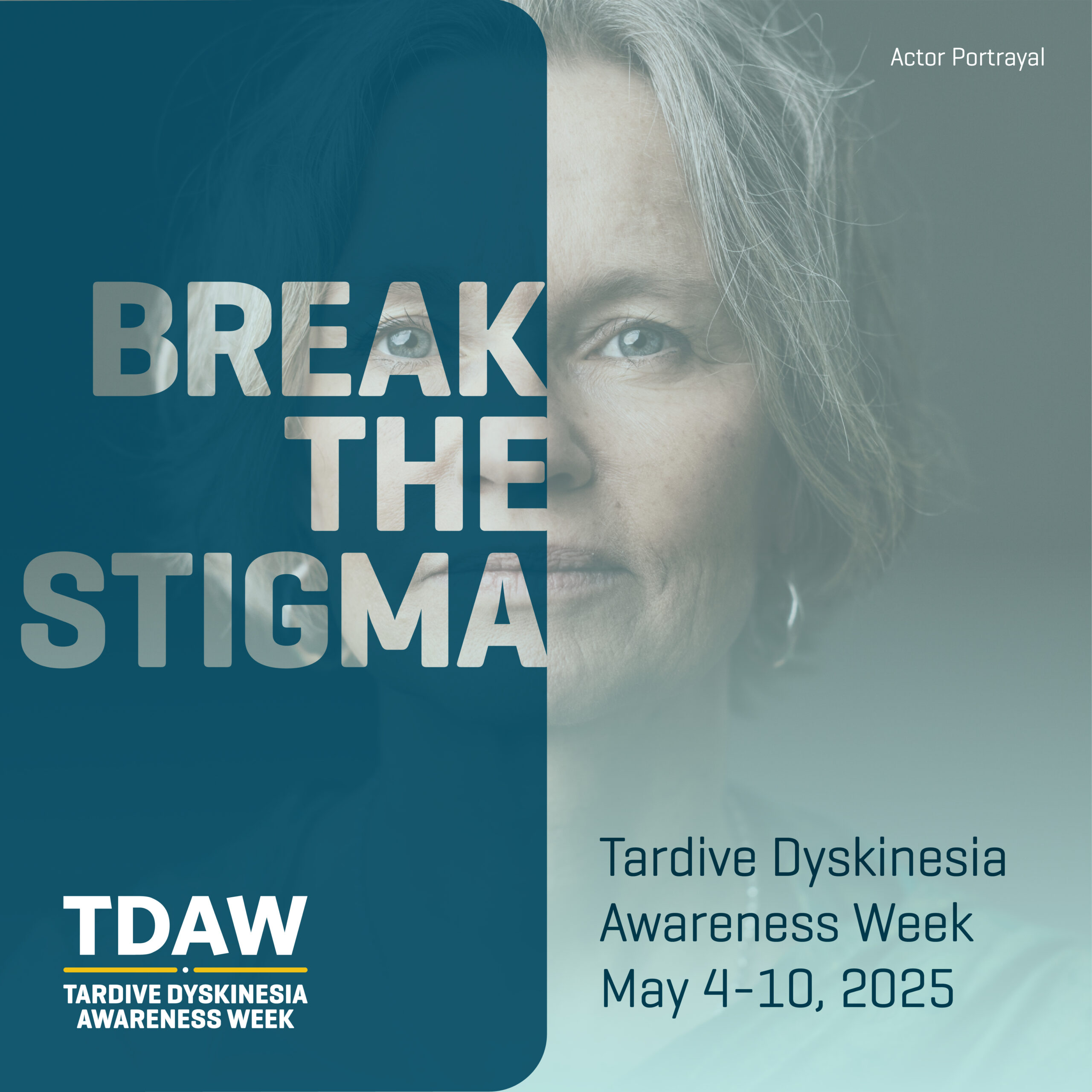
TD symptoms typically occur after several years of taking antipsychotic medications, although they can emerge within just a few months. TD is also related to prolonged use of medications for nausea, and medications that treat neurological disorders, such as Parkinson’s disease.

Anyone taking an antipsychotic may develop TD, but the risk of TD can be higher for certain people:

  • Older adults
  • Females
  • Those with a family history of TD
  • Having negative symptoms of schizophrenia
  • People of African descent

How Can I Manage The Risk Of Tardive Dyskinesia?
You can help manage the risk by addressing lifestyle factors that increase the potential to develop TD. The risk of developing TD rises with smoking, substance use and also uncontrolled diabetes.

Proactively taking care of your health by quitting smoking, avoiding substance use and managing blood sugar levels can be protective and reduce the risk of symptom onset.

Other steps you can take to help manage the risk include asking your health care provider for routine screening of movement symptoms. Recognizing the symptoms of TD early can help lessen their severity, so these screenings should occur every three months.

It’s important to work with your treatment team to make informed choices about medications and the best way to manage all your health conditions.

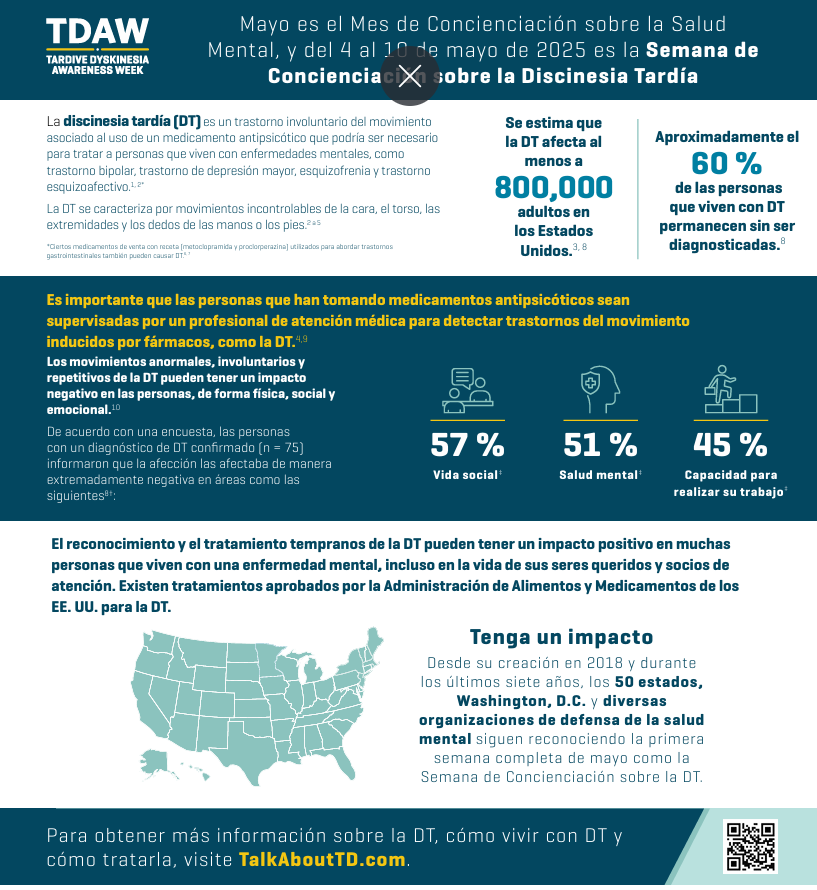
Tardive Dyskinesia Fact Sheets

Click images below to review full document and/or download.

English
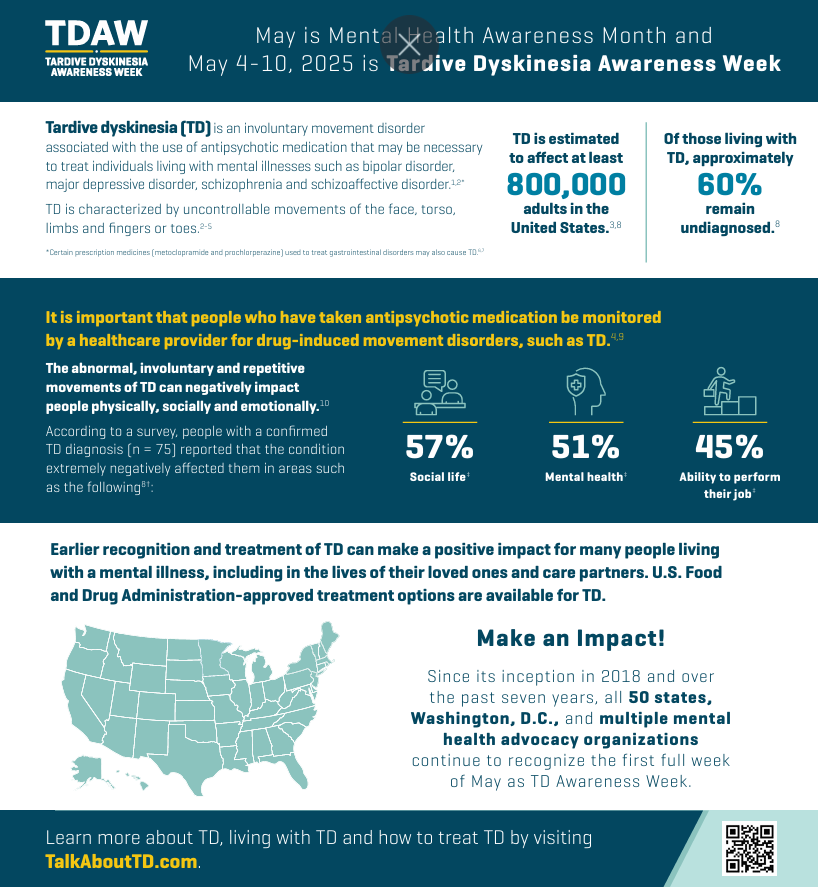
Spanish
How Is Tardive Dyskinesia Treated?

If symptoms of TD develop, your health care provider will evaluate your treatment plan and medication. Your provider may choose to change your medication, or add one specifically designed to improve movement symptoms. It’s important that you don’t abruptly stop taking a medication without talking to your health care provider.

Each person responds to treatment differently, but effective options have emerged over the past several years that help relieve symptoms of TD.

Think you could have TD? Take this survey.

Loader Loading...
EAD Logo Taking too long?
Reload Reload document
| Open Open in new tab

Download [112.98 KB]

A special thank you to Talk About TD for all the information and graphics provided for this webpage.

Contact Us

We're currently offline. Send us an email and we'll get back to you, asap.

Sign up for our e-newsletter! NEWSLETTER SIGN-UP

Contact

  • EIN: 91-1065027
  • 4201 NE 66th Ave., Ste 105, Vancouver, WA
  • (360) 695-2823
  • info@namiswwa.org
  • NAMIswwa.org

© 2026 · NAMISWWA.org · Website design by Valo Consulting · EIN: 91-1065027

Press Enter to search · Esc to close