Skip to content
  • Support
    • Connection Support Groups
    • Family Support Group
    • Social Groups
    • Support & Social Group Feedback
    • Youth Programs
  • Education
    • Basics
    • Family and Friends
    • Family to Family
    • Asking For Change Workshop
    • STRive Course
    • Trusted Adult
  • Advocacy
    • CALM
    • Ending the Silence
    • FaithNet
    • In Our Own Voice
    • Advocate on Lobby Day
    • NAMI On Campus
    • See Me
    • Stigma Free Company
  • Resources
    • Blog
    • About Mental Illness
      • About Mental Illness
      • Adverse Childhood Experiences
      • Co-occurring Disorders
      • Facts and Numbers
      • Knowing the Warning Signs
      • Mental Health Glossary
    • Community Resources
      • Adult Family Homes
      • Council for the Homeless
      • Crisis Lines
      • Free Clinic Of SW WA
      • General Resource List
      • Inpatient & Residential Facilities List
      • Legal
        • Legal Resources
        • Alternatives to Guardianship
        • Guardianship
        • Joel’s Law
        • Medication While Incarcerated
        • WA State Commitment Laws
        • When to Call 911
      • BIPOC Mental Health
      • NAMI Flyers
      • Shonna Roberts and DAELA Cosmetic Tattoo
      • SSI And SSDI Information
      • Trans Lifeline
      • Tardive Dyskinesia
      • YouTalk
      • Youth Resources
    • Crisis Information
      • Mental Health Crisis Lines
      • Preparing for a Crisis
      • SW Washington’s Crisis System
    • LEAP Method
    • Mental Health Treatment
      • Mental Health Treatment
      • Brain Stimulation
      • Complementary Treatment
      • Crisis Treatment
      • Medications
      • Providers
      • Psychosocial Treatments
      • Psychotherapy
      • Treatment Settings
    • Shine the Light Mental Health Summit
    • Recovery Information
      • Guiding Principles of Recovery
      • NAMI Hearts & Minds Program
      • NAMI Recovery Stories
      • Physical Health
      • The 10 Tools
      • What is Recovery?
    • FAQ
    • YouTalkWA
  • Calendar
  • Get Involved
    • Advocate
    • Become a Member
    • Donate
    • Donnelly Walk
    • NAMI Walks
    • Sponsorship Opportunities
    • Shine the Light Mental Health Awareness Summit
    • Tell Your Story
    • Volunteer
    • Winter Supply Bags: Spread Warmth and Compassion This Winter
  • About
    • Our Vision, Mission, and Services
    • A Brief History Of NAMI
    • Our Staff
    • Our Board of Directors
    • Annual Reports
    • Bylaws
    • CLAS Statement
    • Contact
      • Request a Presentation
      • Newsletter
  • DONATE
    • Become a Sustaining Donor
    • Sponsorship Opportunities
  • Accessibility

Contact | (360) 695-2823

info@namiswwa.org
Newsletter
NAMI Southwest WashingtonNAMI Southwest Washington
  • Support
    • Connection Support Groups
    • Family Support Group
    • Social Groups
    • Support & Social Group Feedback
    • Youth Programs
  • Education
    • Basics
    • Family and Friends
    • Family to Family
    • Asking For Change Workshop
    • STRive Course
    • Trusted Adult
  • Advocacy
    • CALM
    • Ending the Silence
    • FaithNet
    • In Our Own Voice
    • Advocate on Lobby Day
    • NAMI On Campus
    • See Me
    • Stigma Free Company
  • Resources
    • Blog
    • About Mental Illness
      • About Mental Illness
      • Adverse Childhood Experiences
      • Co-occurring Disorders
      • Facts and Numbers
      • Knowing the Warning Signs
      • Mental Health Glossary
    • Community Resources
      • Adult Family Homes
      • Council for the Homeless
      • Crisis Lines
      • Free Clinic Of SW WA
      • General Resource List
      • Inpatient & Residential Facilities List
      • Legal
        • Legal Resources
        • Alternatives to Guardianship
        • Guardianship
        • Joel’s Law
        • Medication While Incarcerated
        • WA State Commitment Laws
        • When to Call 911
      • BIPOC Mental Health
      • NAMI Flyers
      • Shonna Roberts and DAELA Cosmetic Tattoo
      • SSI And SSDI Information
      • Trans Lifeline
      • Tardive Dyskinesia
      • YouTalk
      • Youth Resources
    • Crisis Information
      • Mental Health Crisis Lines
      • Preparing for a Crisis
      • SW Washington’s Crisis System
    • LEAP Method
    • Mental Health Treatment
      • Mental Health Treatment
      • Brain Stimulation
      • Complementary Treatment
      • Crisis Treatment
      • Medications
      • Providers
      • Psychosocial Treatments
      • Psychotherapy
      • Treatment Settings
    • Shine the Light Mental Health Summit
    • Recovery Information
      • Guiding Principles of Recovery
      • NAMI Hearts & Minds Program
      • NAMI Recovery Stories
      • Physical Health
      • The 10 Tools
      • What is Recovery?
    • FAQ
    • YouTalkWA
  • Calendar
  • Get Involved
    • Advocate
    • Become a Member
    • Donate
    • Donnelly Walk
    • NAMI Walks
    • Sponsorship Opportunities
    • Shine the Light Mental Health Awareness Summit
    • Tell Your Story
    • Volunteer
    • Winter Supply Bags: Spread Warmth and Compassion This Winter
  • About
    • Our Vision, Mission, and Services
    • A Brief History Of NAMI
    • Our Staff
    • Our Board of Directors
    • Annual Reports
    • Bylaws
    • CLAS Statement
    • Contact
      • Request a Presentation
      • Newsletter
  • DONATE
    • Become a Sustaining Donor
    • Sponsorship Opportunities
  • Accessibility

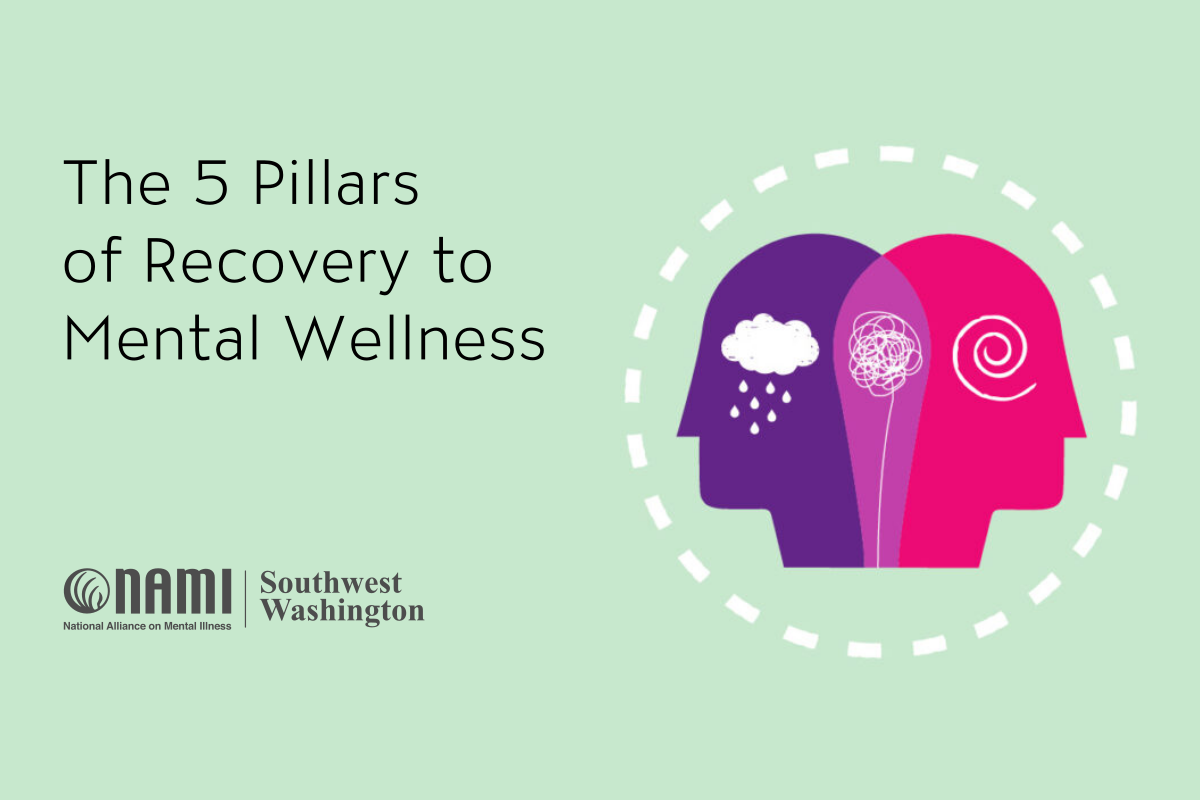
The 5 Pillars of Recovery to Mental Wellness

The 5 Pillars of Recovery to Mental Wellness

The 5 Pillars of Recovery to Mental Wellness

November 1, 2023

By Jared Bendifallah

Let’s face it. Recovery from one or more mental health conditions isn’t easy. My name is Jared Bendifallah. I’ve been in recovery from a serious mental health diagnosis since the summer of 2015. But allow me to backtrack a bit.

I struggled with intense anxiety as a teenager, but the structure that high school and college provided kept me relatively stable for many years. Unfortunately, after college, without any structure or direction in my life, my mental health completely deteriorated. I moved back to my childhood home and lived there from 2013-2015. During this time, I became extremely socially isolated and hopeless about my life. I developed an eating disorder and started to have intense suicidal ideation.

Everything culminated when I spent 50 days at a psychiatric hospital. Thankfully, in the summer of 2015, I got a second chance at life at a residential program in Boulder, Colorado where I was able to get stable for the first time in three long years, overcome my eating disorder, and get my life back.

I started attending peer support groups with the National Alliance on Mental Illness Westside Los Angeles (NAMI WLA) in the summer of 2019. Within a month of going to these groups, I knew I had found my community. In the summer or early fall of 2020, I got trained to be a Peer Connections Support Group Facilitator and have led over 350 support groups for NAMI WLA since October of 2020. I love being in a leadership role and it is incredibly rewarding to help foster a safe space for people to talk openly about their mental health struggles and to get support from other group members.

I have also taught NAMI’s Peer-to-Peer class several times and have spoken to middle schoolers, high schoolers, college students, and graduate students about mental health and stigma as part of NAMI’s “Ending the Silence” program. Currently, I am working full time as a Peer Support Specialist for NAMI WLA, where I get to work one on one with people in recovery from one or more mental health conditions. I have developed these 5 Pillars of Recovery to Mental Wellness by observing what has worked for me along my recovery journey and observing what has worked for others throughout my time as a mental health advocate with NAMI WLA over the last several years.

The 5 Pillars of Recovery are:

1. Basic stability
2. Having a self-care plan
3. Trusting the process of recovery
4. Finding your community
5. Expanded self-awareness and intuition

The first pillar is basic stability, which is the foundation of recovery. This includes having clinical support, such as a psychiatrist and a therapist, and non-clinical support such as friends and family. It also includes having some kind of structure in your life to keep you grounded. My personal lack of structure in my life from 2013-2015, I believe, heavily contributed to my mental health deteriorating after college.

The second pillar is having a self-care plan, which includes cultivating your mental and emotional well-being and having self-care tools that you can use when needed. It also includes having one non-negotiable self-care tool that you can use every single day. This should be something that acts as an anchor for you and provides you with a strong foundation for self-care. For some people this could be exercising 4-5 times a week. For others, it could be journaling or some form of creativity.

The third pillar is trusting the process of recovery. Recovery is a process with bad days and setbacks, but it is important to never give up and to keep moving forward. Take one small step at a time and over the course of many months and even years you will be blown away by how much progress you have made.

The fourth pillar is finding your community. This could be anything from a bird watching club to a book club or a support group. You know you have found your community when you feel like you truly belong and you feel seen, heard, and supported by the people around you.

The fifth pillar is expanded self-awareness and intuition. Becoming more self-aware includes learning about your strengths and talents as well as your struggles and challenges. Self-awareness can lead to greater insight into who you are as a person and is a powerful tool for personal growth.

The fifth pillar also includes following your intuition. Some may call this “intuition” while some may call it a “gut reaction” but it is the part of you, a form of higher intelligence, that knows or understands something without any logical explanation. When you take what I like to call “enlightened action” based on your intuition, you can move your life forward in a way that brings you closer to your deepest dreams and your soul’s purpose, and gives life and recovery greater meaning.

Implementing these 5 Pillars of Recovery can lead to profound growth and healing over time. Keep pushing forward and never give up hope.

If you would like to connect with Jared, feel free to reach out to him on LinkedIn

Copyright © Jared Bendifallah 2023 All Rights Reserved

You also might be interested in

How Walking Has Helped Me With My PTSD Recovery

How Walking Has Helped Me With My PTSD Recovery

Feb 13, 2022

By Katy Parker Last summer, I completed a 10-mile sponsored[...]

Understanding Stigma: Why Words Matter

Understanding Stigma: Why Words Matter

Sep 29, 2025

By NAMI Southwest Washington Language is powerful. The words we[...]

Stress Awareness Month, When Stress Starts to Feel Like Too Much

Stress Awareness Month, When Stress Starts to Feel Like Too Much

Mar 31, 2026

By NAMI Southwest Washington There was a time when Tanya,[...]

Recent Posts

  • When Caring for Someone Else Means Forgetting Yourself
  • When Small Changes Feel Like Big Challenges: Understanding the Stress of Transitions
  • When the Days Get Shorter: Protecting Your Mental Health Through Fall
  • Depression & Mental Health Screening Month
  • What Does Emotional Exhaustion Actually Feel Like?

Blogs by Category

  • Advocacy
  • Alcohol
  • Anxiety
  • Bi-Polar
  • Borderline Personality Disorder
  • Community
  • Depression
  • Dissociative Identity Disorder
  • Eating Disorders
  • Education
  • Events
  • Generational Trauma
  • Holidays & Mental Health
  • Homelessness
  • John LaPointe
  • Law Enforcement
  • LGBTQ+
  • Medication
  • Meditation
  • Mental Health Awareness
  • Mental Health Resources
  • Mental Health System
  • Mental Health Tips
  • Minority Mental health
  • OCD
  • Parenting
  • Personal Stories
  • Psychosis
  • PTSD
  • Recovery
  • Schizophrenia
  • Seasonal Affective Disorder
  • Self Care
  • Self Harm
  • Stigma
  • Stress
  • Suicide
  • Support Groups
  • Therapy and Treatments
  • Trauma
  • Uncategorized
  • Veterans
  • Youth Mental Health

Contact Us

We're currently offline. Send us an email and we'll get back to you, asap.

Sign up for our e-newsletter! NEWSLETTER SIGN-UP

Contact

  • EIN: 91-1065027
  • 4201 NE 66th Ave., Ste 105, Vancouver, WA
  • (360) 695-2823
  • info@namiswwa.org
  • NAMIswwa.org

© 2026 · NAMISWWA.org · Website design by Valo Consulting · EIN: 91-1065027

Prev Next

Press Enter to search · Esc to close