
Skip to content
  • Support
    • Connection Support Groups
    • Family Support Group
    • Social Groups
    • Support & Social Group Feedback
    • Youth Programs
  • Education
    • Basics
    • Family and Friends
    • Family to Family
    • Asking For Change Workshop
    • STRive Course
    • Trusted Adult
  • Advocacy
    • CALM
    • Ending the Silence
    • FaithNet
    • In Our Own Voice
    • Advocate on Lobby Day
    • NAMI On Campus
    • See Me
    • Stigma Free Company
  • Resources
    • Blog
    • About Mental Illness
      • About Mental Illness
      • Adverse Childhood Experiences
      • Co-occurring Disorders
      • Facts and Numbers
      • Knowing the Warning Signs
      • Mental Health Glossary
    • Community Resources
      • Adult Family Homes
      • Council for the Homeless
      • Crisis Lines
      • Free Clinic Of SW WA
      • General Resource List
      • Inpatient & Residential Facilities List
      • Legal
        • Legal Resources
        • Alternatives to Guardianship
        • Guardianship
        • Joel’s Law
        • Medication While Incarcerated
        • WA State Commitment Laws
        • When to Call 911
      • BIPOC Mental Health
      • NAMI Flyers
      • Shonna Roberts and DAELA Cosmetic Tattoo
      • SSI And SSDI Information
      • Trans Lifeline
      • Tardive Dyskinesia
      • YouTalk
      • Youth Resources
    • Crisis Information
      • Mental Health Crisis Lines
      • Preparing for a Crisis
      • SW Washington’s Crisis System
    • LEAP Method
    • Mental Health Treatment
      • Mental Health Treatment
      • Brain Stimulation
      • Complementary Treatment
      • Crisis Treatment
      • Medications
      • Providers
      • Psychosocial Treatments
      • Psychotherapy
      • Treatment Settings
    • Shine the Light Mental Health Summit
    • Recovery Information
      • Guiding Principles of Recovery
      • NAMI Hearts & Minds Program
      • NAMI Recovery Stories
      • Physical Health
      • The 10 Tools
      • What is Recovery?
    • FAQ
    • YouTalkWA
  • Calendar
  • Get Involved
    • Advocate
    • Become a Member
    • Donate
    • Donnelly Walk
    • NAMI Walks
    • Sponsorship Opportunities
    • Shine the Light Mental Health Awareness Summit
    • Tell Your Story
    • Volunteer
    • Winter Supply Bags: Spread Warmth and Compassion This Winter
  • About
    • Our Vision, Mission, and Services
    • A Brief History Of NAMI
    • Our Staff
    • Our Board of Directors
    • Annual Reports
    • Bylaws
    • CLAS Statement
    • Contact
      • Request a Presentation
      • Newsletter
  • DONATE
    • Become a Sustaining Donor
    • Sponsorship Opportunities
  • Accessibility

Contact | (360) 695-2823

info@namiswwa.org
Newsletter
NAMI Southwest WashingtonNAMI Southwest Washington
  • Support
    • Connection Support Groups
    • Family Support Group
    • Social Groups
    • Support & Social Group Feedback
    • Youth Programs
  • Education
    • Basics
    • Family and Friends
    • Family to Family
    • Asking For Change Workshop
    • STRive Course
    • Trusted Adult
  • Advocacy
    • CALM
    • Ending the Silence
    • FaithNet
    • In Our Own Voice
    • Advocate on Lobby Day
    • NAMI On Campus
    • See Me
    • Stigma Free Company
  • Resources
    • Blog
    • About Mental Illness
      • About Mental Illness
      • Adverse Childhood Experiences
      • Co-occurring Disorders
      • Facts and Numbers
      • Knowing the Warning Signs
      • Mental Health Glossary
    • Community Resources
      • Adult Family Homes
      • Council for the Homeless
      • Crisis Lines
      • Free Clinic Of SW WA
      • General Resource List
      • Inpatient & Residential Facilities List
      • Legal
        • Legal Resources
        • Alternatives to Guardianship
        • Guardianship
        • Joel’s Law
        • Medication While Incarcerated
        • WA State Commitment Laws
        • When to Call 911
      • BIPOC Mental Health
      • NAMI Flyers
      • Shonna Roberts and DAELA Cosmetic Tattoo
      • SSI And SSDI Information
      • Trans Lifeline
      • Tardive Dyskinesia
      • YouTalk
      • Youth Resources
    • Crisis Information
      • Mental Health Crisis Lines
      • Preparing for a Crisis
      • SW Washington’s Crisis System
    • LEAP Method
    • Mental Health Treatment
      • Mental Health Treatment
      • Brain Stimulation
      • Complementary Treatment
      • Crisis Treatment
      • Medications
      • Providers
      • Psychosocial Treatments
      • Psychotherapy
      • Treatment Settings
    • Shine the Light Mental Health Summit
    • Recovery Information
      • Guiding Principles of Recovery
      • NAMI Hearts & Minds Program
      • NAMI Recovery Stories
      • Physical Health
      • The 10 Tools
      • What is Recovery?
    • FAQ
    • YouTalkWA
  • Calendar
  • Get Involved
    • Advocate
    • Become a Member
    • Donate
    • Donnelly Walk
    • NAMI Walks
    • Sponsorship Opportunities
    • Shine the Light Mental Health Awareness Summit
    • Tell Your Story
    • Volunteer
    • Winter Supply Bags: Spread Warmth and Compassion This Winter
  • About
    • Our Vision, Mission, and Services
    • A Brief History Of NAMI
    • Our Staff
    • Our Board of Directors
    • Annual Reports
    • Bylaws
    • CLAS Statement
    • Contact
      • Request a Presentation
      • Newsletter
  • DONATE
    • Become a Sustaining Donor
    • Sponsorship Opportunities
  • Accessibility
Changing the Narrative on Suicide: Start the Conversation

Changing the Narrative on Suicide: Start the Conversation

September 1, 2026

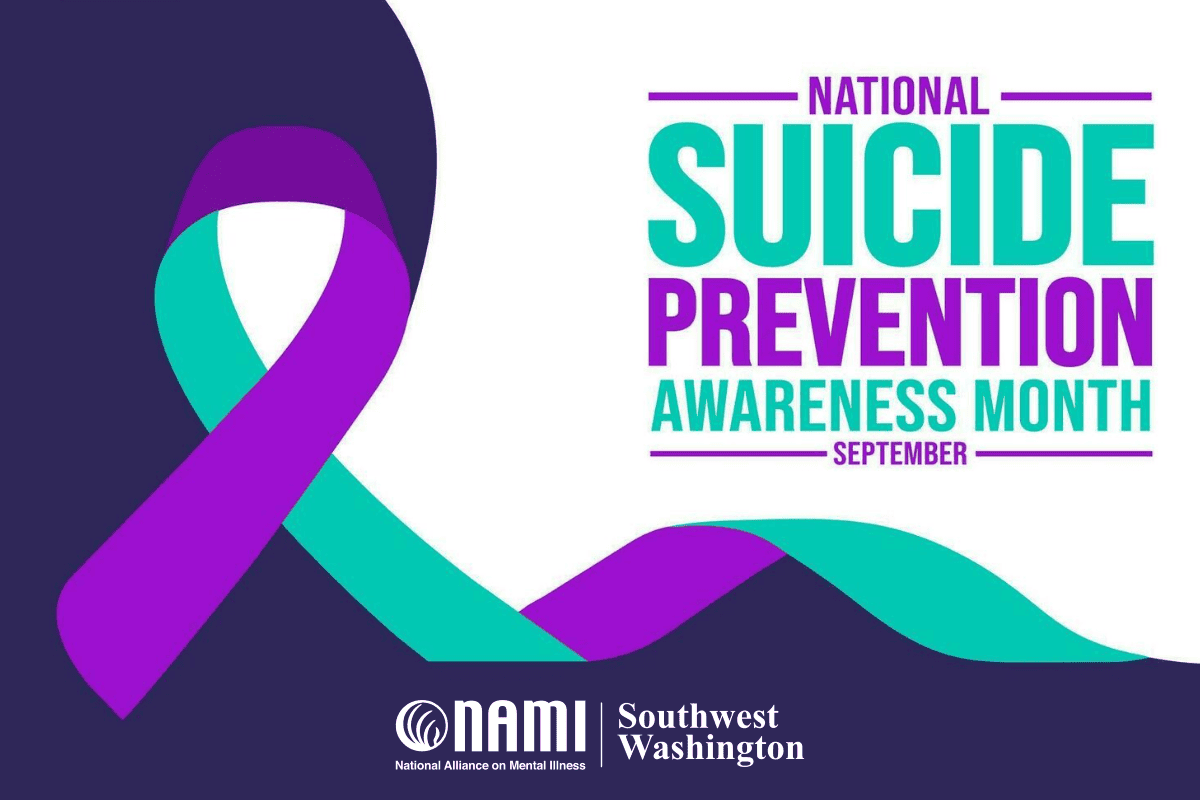
September is National Suicide Prevention Month, a time to raise awareness, challenge stigma, remember those we have lost, and remind people that support is available.

This year, the message feels especially important. The 2026 theme for World Suicide Prevention Day, observed on September 10, is “Changing the Narrative on Suicide,” with a simple but powerful call to action: Start the Conversation.

For a long time, suicide has been surrounded by silence. People may be afraid that talking about suicide will make things worse, unsure what to say, or worried about saying the wrong thing. That silence can leave someone who is struggling feeling even more alone.

Changing the narrative means making it easier to talk about mental health, emotional pain, suicidal thoughts, and the need for help without shame or judgment. It means creating communities where someone can say, “I’m not doing well,” and know that they will be met with compassion.

Starting the Conversation

You do not have to be a mental health professional to make a difference in someone’s life. Sometimes it begins with noticing that someone seems different and being willing to check in. Ask how they are doing, and give them space to answer honestly. Listen without immediately trying to fix the situation. Let them know they matter and that they do not have to face what they are experiencing alone.

It is also okay to talk directly about suicide when you are concerned about someone. Conversations about suicide do not have to be perfect. What matters is showing up, listening, and taking the person seriously.

Changing the narrative also means changing the way we talk about people who experience suicidal thoughts. A person can be struggling deeply while still having hope for the future. Asking for help is not weakness. Mental health challenges are not character flaws, and no one should have to reach a crisis point before feeling that they are worthy of support.

Connection Can Make a Difference

Suicide prevention is not limited to responding during a crisis. It also happens in the everyday ways we create connection. It happens when we check on a friend who has withdrawn. It happens when families make room for honest conversations about mental health. It happens when workplaces, schools, and communities create environments where people feel safe asking for help. It happens when we listen to people with lived experience and allow their voices to shape how we understand suicide and prevention.

At NAMI Southwest Washington, we believe connection, education, support, and open conversation can help reduce stigma and remind people that they are not alone.

This September, we encourage you to help change the narrative. Check in with someone. Talk openly about mental health. Listen without judgment. Share resources. Make space for conversations that may be difficult but deeply important. Sometimes starting the conversation is the first step toward helping someone find hope.

A Story of Hope

For Lydia Dobbins, suicidal thoughts began when she was only seven years old and continued alongside depression and anxiety for many years. As a young adult, she reached a point where those thoughts became especially dangerous.

Eventually, Lydia began counseling and learned tools that helped her navigate the moments when suicidal thoughts returned. One of the most meaningful was a safety plan, a list of steps she could follow when she was struggling, including connecting with other people and getting outside in nature.

Today, Lydia describes herself as being in recovery. She went on to become a certified recreation therapist and has worked in psychiatric hospitals and as a case manager, using her own experiences to help others.

Her story is an important reminder that the way someone feels in their darkest moment does not have to determine the rest of their story. Support, connection, and simply being able to tell someone what is happening can be the beginning of something different.

Read Lydia Dobbins’ full story, “Surviving Suicidal Ideation and Finding Recovery,” on NAMI.org.

—

If you or someone you know is experiencing a mental health or suicidal crisis, call or text 988 to reach the 988 Suicide & Crisis Lifeline. Free, confidential support from trained crisis counselors is available 24 hours a day, seven days a week.

You also might be interested in

Finding My Life’s Purpose In Suicide Prevention And Peer Support

Finding My Life’s Purpose In Suicide Prevention And Peer Support

Sep 12, 2022

By Judith Viers My name is Judith Marie Kuzmak Viers,[...]

Navigating Depression And Psychosis: The Experience We Rarely Talk About

Navigating Depression And Psychosis: The Experience We Rarely Talk About

Nov 4, 2022

By Andrea Rosenhaft LCSW-R My first episode of psychosis arose[...]

Most US Police Are Heavily Unprepared To Handle Crises With The Mentally Ill

Most US Police Are Heavily Unprepared To Handle Crises With The Mentally Ill

Jan 12, 2022

Most U.S. police receive little or no training on how[...]

Recent Posts

  • When Caring for Someone Else Means Forgetting Yourself
  • When Small Changes Feel Like Big Challenges: Understanding the Stress of Transitions
  • When the Days Get Shorter: Protecting Your Mental Health Through Fall
  • Depression & Mental Health Screening Month
  • What Does Emotional Exhaustion Actually Feel Like?

Blogs by Category

  • Advocacy
  • Alcohol
  • Anxiety
  • Bi-Polar
  • Borderline Personality Disorder
  • Community
  • Depression
  • Dissociative Identity Disorder
  • Eating Disorders
  • Education
  • Events
  • Generational Trauma
  • Holidays & Mental Health
  • Homelessness
  • John LaPointe
  • Law Enforcement
  • LGBTQ+
  • Medication
  • Meditation
  • Mental Health Awareness
  • Mental Health Resources
  • Mental Health System
  • Mental Health Tips
  • Minority Mental health
  • OCD
  • Parenting
  • Personal Stories
  • Psychosis
  • PTSD
  • Recovery
  • Schizophrenia
  • Seasonal Affective Disorder
  • Self Care
  • Self Harm
  • Stigma
  • Stress
  • Suicide
  • Support Groups
  • Therapy and Treatments
  • Trauma
  • Uncategorized
  • Veterans
  • Youth Mental Health

Contact Us

We're currently offline. Send us an email and we'll get back to you, asap.

Sign up for our e-newsletter! NEWSLETTER SIGN-UP

Contact

  • EIN: 91-1065027
  • 4201 NE 66th Ave., Ste 105, Vancouver, WA
  • (360) 695-2823
  • info@namiswwa.org
  • NAMIswwa.org

© 2026 · NAMISWWA.org · Website design by Valo Consulting · EIN: 91-1065027

Prev Next

Press Enter to search · Esc to close