Skip to content
  • Support
    • Connection Support Groups
    • Family Support Group
    • Social Groups
    • Support & Social Group Feedback
    • Youth Programs
  • Education
    • Basics
    • Family and Friends
    • Family to Family
    • Asking For Change Workshop
    • STRive Course
    • Trusted Adult
  • Advocacy
    • CALM
    • Ending the Silence
    • FaithNet
    • In Our Own Voice
    • Advocate on Lobby Day
    • NAMI On Campus
    • See Me
    • Stigma Free Company
  • Resources
    • Blog
    • About Mental Illness
      • About Mental Illness
      • Adverse Childhood Experiences
      • Co-occurring Disorders
      • Facts and Numbers
      • Knowing the Warning Signs
      • Mental Health Glossary
    • Community Resources
      • Adult Family Homes
      • Council for the Homeless
      • Crisis Lines
      • Free Clinic Of SW WA
      • General Resource List
      • Inpatient & Residential Facilities List
      • Legal
        • Legal Resources
        • Alternatives to Guardianship
        • Guardianship
        • Joel’s Law
        • Medication While Incarcerated
        • WA State Commitment Laws
        • When to Call 911
      • BIPOC Mental Health
      • NAMI Flyers
      • Shonna Roberts and DAELA Cosmetic Tattoo
      • SSI And SSDI Information
      • Trans Lifeline
      • Tardive Dyskinesia
      • YouTalk
      • Youth Resources
    • Crisis Information
      • Mental Health Crisis Lines
      • Preparing for a Crisis
      • SW Washington’s Crisis System
    • LEAP Method
    • Mental Health Treatment
      • Mental Health Treatment
      • Brain Stimulation
      • Complementary Treatment
      • Crisis Treatment
      • Medications
      • Providers
      • Psychosocial Treatments
      • Psychotherapy
      • Treatment Settings
    • Shine the Light Mental Health Summit
    • Recovery Information
      • Guiding Principles of Recovery
      • NAMI Hearts & Minds Program
      • NAMI Recovery Stories
      • Physical Health
      • The 10 Tools
      • What is Recovery?
    • FAQ
    • YouTalkWA
  • Calendar
  • Get Involved
    • Advocate
    • Become a Member
    • Donate
    • Donnelly Walk
    • NAMI Walks
    • Sponsorship Opportunities
    • Shine the Light Mental Health Awareness Summit
    • Tell Your Story
    • Volunteer
    • Winter Supply Bags: Spread Warmth and Compassion This Winter
  • About
    • Our Vision, Mission, and Services
    • A Brief History Of NAMI
    • Our Staff
    • Our Board of Directors
    • Annual Reports
    • Bylaws
    • CLAS Statement
    • Contact
      • Request a Presentation
      • Newsletter
  • DONATE
    • Become a Sustaining Donor
    • Sponsorship Opportunities
  • Accessibility

Contact | (360) 695-2823

info@namiswwa.org
Newsletter
NAMI Southwest WashingtonNAMI Southwest Washington
  • Support
    • Connection Support Groups
    • Family Support Group
    • Social Groups
    • Support & Social Group Feedback
    • Youth Programs
  • Education
    • Basics
    • Family and Friends
    • Family to Family
    • Asking For Change Workshop
    • STRive Course
    • Trusted Adult
  • Advocacy
    • CALM
    • Ending the Silence
    • FaithNet
    • In Our Own Voice
    • Advocate on Lobby Day
    • NAMI On Campus
    • See Me
    • Stigma Free Company
  • Resources
    • Blog
    • About Mental Illness
      • About Mental Illness
      • Adverse Childhood Experiences
      • Co-occurring Disorders
      • Facts and Numbers
      • Knowing the Warning Signs
      • Mental Health Glossary
    • Community Resources
      • Adult Family Homes
      • Council for the Homeless
      • Crisis Lines
      • Free Clinic Of SW WA
      • General Resource List
      • Inpatient & Residential Facilities List
      • Legal
        • Legal Resources
        • Alternatives to Guardianship
        • Guardianship
        • Joel’s Law
        • Medication While Incarcerated
        • WA State Commitment Laws
        • When to Call 911
      • BIPOC Mental Health
      • NAMI Flyers
      • Shonna Roberts and DAELA Cosmetic Tattoo
      • SSI And SSDI Information
      • Trans Lifeline
      • Tardive Dyskinesia
      • YouTalk
      • Youth Resources
    • Crisis Information
      • Mental Health Crisis Lines
      • Preparing for a Crisis
      • SW Washington’s Crisis System
    • LEAP Method
    • Mental Health Treatment
      • Mental Health Treatment
      • Brain Stimulation
      • Complementary Treatment
      • Crisis Treatment
      • Medications
      • Providers
      • Psychosocial Treatments
      • Psychotherapy
      • Treatment Settings
    • Shine the Light Mental Health Summit
    • Recovery Information
      • Guiding Principles of Recovery
      • NAMI Hearts & Minds Program
      • NAMI Recovery Stories
      • Physical Health
      • The 10 Tools
      • What is Recovery?
    • FAQ
    • YouTalkWA
  • Calendar
  • Get Involved
    • Advocate
    • Become a Member
    • Donate
    • Donnelly Walk
    • NAMI Walks
    • Sponsorship Opportunities
    • Shine the Light Mental Health Awareness Summit
    • Tell Your Story
    • Volunteer
    • Winter Supply Bags: Spread Warmth and Compassion This Winter
  • About
    • Our Vision, Mission, and Services
    • A Brief History Of NAMI
    • Our Staff
    • Our Board of Directors
    • Annual Reports
    • Bylaws
    • CLAS Statement
    • Contact
      • Request a Presentation
      • Newsletter
  • DONATE
    • Become a Sustaining Donor
    • Sponsorship Opportunities
  • Accessibility

Adopting A Cat Helped Me Find Recovery

Adopting A Cat Helped Me Find Recovery

Adopting A Cat Helped Me Find Recovery

February 9, 2022

By Anna Smith

It was November, just after I had been discharged from my fourth inpatient stay that year. I was depressed, anxious and unsure if I could finish out freshman year at my university. I had moved home so I could focus on recovery without the stress of living in an on-campus dorm.

My mom, desperate to find something to help me engage with the world, brought me to the local animal shelter. Immediately, I was overwhelmed by the number of animals with their faces pressed against the bars of the cages. My eyes fell on a young Siamese cat with a striped face and tail. She cowered at the back of the cage. A shelter volunteer told us that she had been there for six months, ever since she was found trapped in a wall as a kitten.

I reached my hand into the cage. She tentatively rubbed her head against my hand before flinching and retreating to her hiding spot. The volunteer told me that she would need a lot of work if we were to adopt her, and she was unsure if the cat would ever come around to being a tame house cat. I signed the adoption papers a few minutes later and brought her home. Little did I know how impactful she would be on my recovery.

A Reason To Get Up In The Morning
The new medication I was taking often sedated me, so I slept for most of the next few days. When I was awake, I spent most of my time bonding with my new cat, whom I named Maya. She stayed hidden underneath the bed I bought for her, never coming out to eat or drink. I brought out my favorite book, “Pride and Prejudice,” and began reading it out loud so she would get used to my voice.

By the second day after adopting Maya, she took a few steps toward me with trepidation. I held a treat in my hand and watched as she took it from my fingers. I took a few deep breaths, calming my anxiety that rushed through me. I had to be calm for Maya.

After a few days of reading to Maya and feeding her out of my hand, she seemed to open up to me. She let me pet her, as long as I let her approach me first. Having an animal that I was responsible for gave me a reason to get up in the mornings. I had to clean her litter box, feed her and play with her. I couldn’t just retreat into my thoughts and refuse to interact with the world like my depression wanted me to. Maya needed me as much as I needed her.

A Constant Companion
After the week was over, I returned to my online classes for the first time since returning from the hospital. I did all my classes in my room with Maya, continuing to let her acclimate to my presence. One day during class, she climbed into my lap and settled down to sleep. I felt my first positive emotion in a long time that day. I even allowed a small smile to creep onto my face.

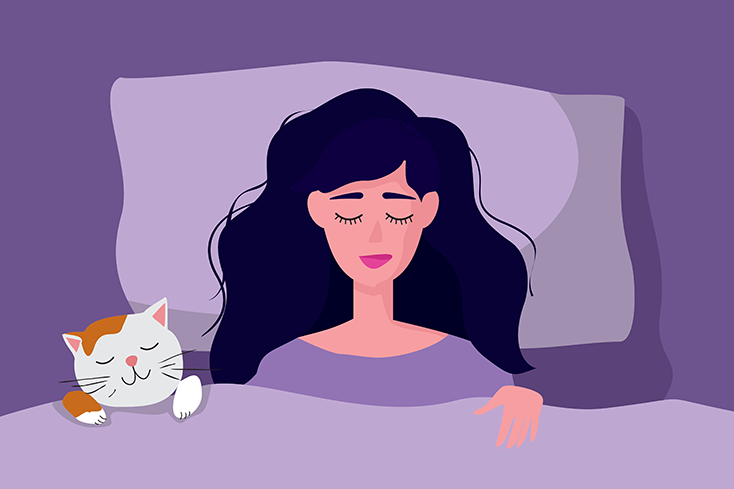
Maya became popular in my online group therapy sessions where she would beg to play fetch by bringing me a toy mouse to throw as if she was showing off for a crowd. She started sleeping on my bed every night and would follow me around the house during the day.

I started to see small improvements in my mental health after I adopted Maya. I had days where I was able to get out of bed and get dressed. Having an animal that was completely reliant on me calmed the intrusive suicidal thoughts I had been struggling with for the past year. Having a soft cat that was nearly always on my lap helped to soothe my anxious mind and gave me a companion to help me through my hardest days.

A Source Of Unconditional Love
I chose to withdraw from my university in the spring semester and take a couple months to focus on my recovery. The following months were difficult, as I underwent medication changes and treatments to focus on healing. Maya was by my side as I suffered through medication withdrawal and while I adjusted to the new medications. She was there when I came home exhausted from my daily transcranial magnetic stimulation sessions.

As spring turned into summer, I started seeing bigger improvements. I had more days where I was able to be myself and laugh, and I chose to interact with the world more. When my family went on vacation that summer, we brought Maya with us. I was able to enjoy myself for the first time in several years, and when I felt overwhelmed, I could always go to my room and find Maya, who would instantly climb onto my lap and settle in. Together, we could help each other.

At the end of the summer, I chose to enroll again in university. I felt that, with intensive support, I was ready to return to my education. Finding recovery took a good medication regimen, the right kind of therapy and an arsenal of coping skills, but in the end, it also took the unconditional love of a little Siamese cat named Maya.


Anna Smith is a sophomore at Virginia Tech studying communication with a minor in psychology. She hopes to work in the mental health field one day as a lived experience counselor. She lives in Virginia with her two cats, Maya and Blueberry. In her free time, she loves to write, read and ride horses.

Source: https://nami.org/Blogs/NAMI-Blog/January-2022/Adopting-a-Cat-Helped-Me-Find-Recovery

You also might be interested in

When Stigma Struck Out: The Jimmy Piersall Story

When Stigma Struck Out: The Jimmy Piersall Story

Feb 18, 2022

By Bob Carolla Jimmy Piersall was one of the greatest[...]

Life With High-Functioning Depression: Functional Does Not Always Mean Healthy

Life With High-Functioning Depression: Functional Does Not Always Mean Healthy

May 29, 2022

By Lauren Holmes Since adolescence, I have prided myself on[...]

Hope Starts With Us: Asian American and Pacific Islander Mental Health

Hope Starts With Us: Asian American and Pacific Islander Mental Health

Jun 3, 2023

In honor of AAPI Heritage Month, NAMI CEO Daniel H.[...]

Recent Posts

  • When Caring for Someone Else Means Forgetting Yourself
  • When Small Changes Feel Like Big Challenges: Understanding the Stress of Transitions
  • When the Days Get Shorter: Protecting Your Mental Health Through Fall
  • Depression & Mental Health Screening Month
  • What Does Emotional Exhaustion Actually Feel Like?

Blogs by Category

  • Advocacy
  • Alcohol
  • Anxiety
  • Bi-Polar
  • Borderline Personality Disorder
  • Community
  • Depression
  • Dissociative Identity Disorder
  • Eating Disorders
  • Education
  • Events
  • Generational Trauma
  • Holidays & Mental Health
  • Homelessness
  • John LaPointe
  • Law Enforcement
  • LGBTQ+
  • Medication
  • Meditation
  • Mental Health Awareness
  • Mental Health Resources
  • Mental Health System
  • Mental Health Tips
  • Minority Mental health
  • OCD
  • Parenting
  • Personal Stories
  • Psychosis
  • PTSD
  • Recovery
  • Schizophrenia
  • Seasonal Affective Disorder
  • Self Care
  • Self Harm
  • Stigma
  • Stress
  • Suicide
  • Support Groups
  • Therapy and Treatments
  • Trauma
  • Uncategorized
  • Veterans
  • Youth Mental Health

Contact Us

We're currently offline. Send us an email and we'll get back to you, asap.

Sign up for our e-newsletter! NEWSLETTER SIGN-UP

Contact

  • EIN: 91-1065027
  • 4201 NE 66th Ave., Ste 105, Vancouver, WA
  • (360) 695-2823
  • info@namiswwa.org
  • NAMIswwa.org

© 2026 · NAMISWWA.org · Website design by Valo Consulting · EIN: 91-1065027

Prev Next

Press Enter to search · Esc to close