
As June comes to a close, PTSD Awareness Month also comes to an end, but the need for understanding and support does not. Awareness months can help start important conversations, shine light on overlooked experiences, and encourage people to learn more. That matters. Still, trauma does not live on a schedule, and the effects of trauma do not disappear when the month changes.
People living with PTSD still deserve compassion, education, and support every day of the year. Their needs do not become less real once a calendar page turns. That is why it is important to carry these conversations forward, even after the awareness month itself has passed.
PTSD Does Not Always Look the Way People Expect
PTSD does not always look the way people expect. It is not always obvious. It is not always dramatic. Many people still carry a narrow image of what PTSD is supposed to look like, and that can make it harder to recognize in real life. Sometimes it looks like someone who is exhausted all the time, always on edge, easily startled, emotionally shut down, or doing their best to stay in control no matter how much is happening inside.

PTSD does not always look the way people expect. It is not always obvious. It is not always dramatic. Sometimes it looks like someone who is exhausted all the time, always on edge, easily startled, emotionally shut down, or doing their best to stay in control. Sometimes it shows up in sleep problems, irritability, panic, difficulty trusting others, or feeling unsafe even in ordinary moments.
The Cost of Being Misunderstood
Because trauma responses are often invisible, people can be misunderstood. Someone may be labeled as cold, angry, distant, overly sensitive, or difficult, when what they are really carrying is the impact of something painful that has not fully let go of them. That is one reason PTSD awareness matters so much. Understanding creates more room for compassion, and compassion can help reduce shame.
There Is No Timeline for Trauma
For many people, one of the hardest parts of PTSD is the feeling that they should be over it by now. Trauma does not work that way. Some people struggle right away. Others keep moving for years before the impact catches up with them. Some have seasons when symptoms are more manageable, followed by times when everything feels closer to the surface again. There is no single timeline for trauma, and there is no deadline for deserving support.
Awareness Should Lead to Something Deeper
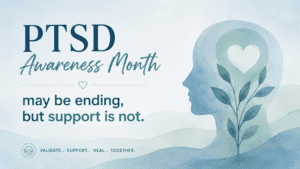 As this month ends, it is worth remembering that awareness should lead to something deeper. It should lead to better conversations, less stigma, more patience, and stronger support systems. It should remind us to ask not just what someone is doing, but what they may be carrying. It should help us create communities where people do not have to hide their struggle in order to be accepted.
Support Is Still Here
If you are living with PTSD, or with trauma responses that feel familiar, please know this, you are not weak, you are not failing, and you do not have to explain everything perfectly to deserve care. Support matters whether your trauma happened recently or years ago. Healing is not always linear, but it is possible.
At NAMI Southwest Washington, we believe that mental health support should be available before crisis and without judgment. PTSD Awareness Month may be ending, but the message remains the same. You are not alone. Your experience matters. Support is still here.