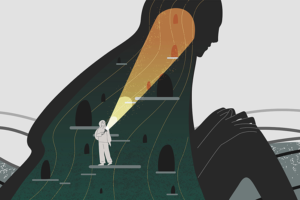

People often talk about trauma like it is something that happened back then, in one painful moment, during one hard season, or in a chapter of life that is now over. What gets missed is that trauma does not always stay in the past just because time has passed. For many people, the effects of trauma continue showing up in the present, in the body, in relationships, in sleep, in emotions, and in the way everyday life is experienced.
You may know this feeling without always having words for it. Maybe something small sets off a strong reaction you do not fully understand. Maybe rest feels hard, trust feels fragile, or your mind stays on alert even when things are technically okay. Maybe you tell yourself you should be over it by now, but your nervous system seems to be telling a different story.
That does not mean you are broken. It means trauma can leave an imprint that is deeper than memory alone.
Trauma Does Not Only Live in Thoughts

When people think about trauma, they often think about remembering something painful. That can be part of it, but trauma can affect much more than memory. It can shape how safe the world feels, how quickly your body reacts to stress, how easily you feel overwhelmed, and how hard it is to settle after something upsetting happens.
For some people, trauma shows up as anxiety, irritability, panic, or emotional numbness. For others, it looks like shutting down, avoiding certain people or situations, staying constantly busy, or feeling disconnected from themselves and others. Sometimes the response is obvious. Sometimes it is quiet and easy to miss, especially when someone is still going to work, taking care of others, or doing their best to look fine on the outside.
This is one reason trauma is so often misunderstood. People may judge the reaction without understanding the pain underneath it.
It Can Show Up Long After the Event Is Over
One of the hardest parts of trauma is that it does not always follow a timeline that makes sense to other people. Some people feel the effects right away. Others keep moving for years before the impact catches up with them. A person may seem okay for a long time, then suddenly struggle when life slows down, when a major change happens, or when something unexpectedly brings old pain back to the surface.
That can feel confusing, especially if the original event happened a long time ago. It can also bring shame. People may wonder why they are still affected. They may compare themselves to others or minimize what they went through. They may think needing support years later means they are weak.
It does not.
Trauma responses are not a failure. They are signs that something painful happened, and that part of you is still trying to survive it.
Trauma Can Affect Relationships Too
When trauma does not stay in the past, it often affects connection. A person may want closeness but struggle with trust. They may pull away when they feel overwhelmed or become highly sensitive to conflict, tone, rejection, or unpredictability. They may react strongly in moments that seem small to others, then feel guilty afterward.
This can be painful not only for the person carrying the trauma, but also for the people who care about them. Loved ones may not understand why someone is distant, guarded, reactive, or exhausted. Without context, trauma responses can look like anger, coldness, overreaction, or disinterest.
This is why education and compassion matter so much. When we understand that trauma can shape behavior, we create more room for patience, care, and healthier conversations.
Healing Is Not About Pretending It Never Happened
There can be a lot of pressure to move on quickly, stay positive, or prove that the past no longer has any effect. Real healing usually does not look like that. Healing is not pretending the trauma never happened. It is learning how to live with more safety, more support, and more understanding of what your mind and body have been carrying.
That process is not linear. Some days may feel steady. Others may feel heavy again. Progress may show up quietly, through better boundaries, deeper self-awareness, more honest conversations, or finally recognizing when you need rest and support.
Small things can matter deeply. Naming what happened. Talking to someone you trust. Learning your triggers. Finding grounding tools that help. Joining a support group. Letting go of the belief that you have to handle it all alone. These steps may not look dramatic from the outside, but they can change a great deal over time.
Support Matters, Even If You Have Been Carrying It for Years
A lot of people wait to seek help because they believe they should be able to handle it on their own, or because they think too much time has passed. The truth is that support is not only for the immediate aftermath of trauma. It matters years later too. It matters when the impact becomes clearer. It matters when you are tired of surviving in silence.
At NAMI Southwest Washington, we believe support should be available before crisis and without judgment. We know that mental health struggles are not always visible, and that lived experience matters. When trauma continues to affect daily life, connection can be part of healing. Being around people who understand, or simply feeling less alone in what you are carrying, can make a real difference.
You Are Not Failing
If trauma from the past still affects you now, you are not failing. You are not weak, and you are not behind. You are having a human response to something painful that mattered, and may still matter more than others can see.
When trauma does not stay in the past, it can make the present feel harder than it should. It can affect your body, your relationships, your energy, and your sense of safety. That is real. It deserves compassion, not shame.
Healing is possible, even if it is slow. Support is possible, even if you have been carrying this for a long time. You do not have to prove how much you hurt in order to deserve care. You do not have to navigate it alone.